Viljandi Museum
Viljandi Muuseum
Tuesday to Sunday, 11:00–18:00
The museum is closed on public holidays.
Johan Laidoneri plats 10, 71020 Viljandi
The nearest bus stop is Vabaduse plats.
Explore the history of Viljandi County across two floors of permanent displays,
complemented by changing temporary exhibitions.
Visitor information: +372 433 3316
The permanent exhibition on two floors of the museum presents the history of Viljandi County through the centuries.
The permanent exhibition begins in a gallery used for Viljandi Museum’s temporary exhibitions. These changing exhibitions explore a variety of themes, people and stories, offering different perspectives on the culture and history of Viljandi County.
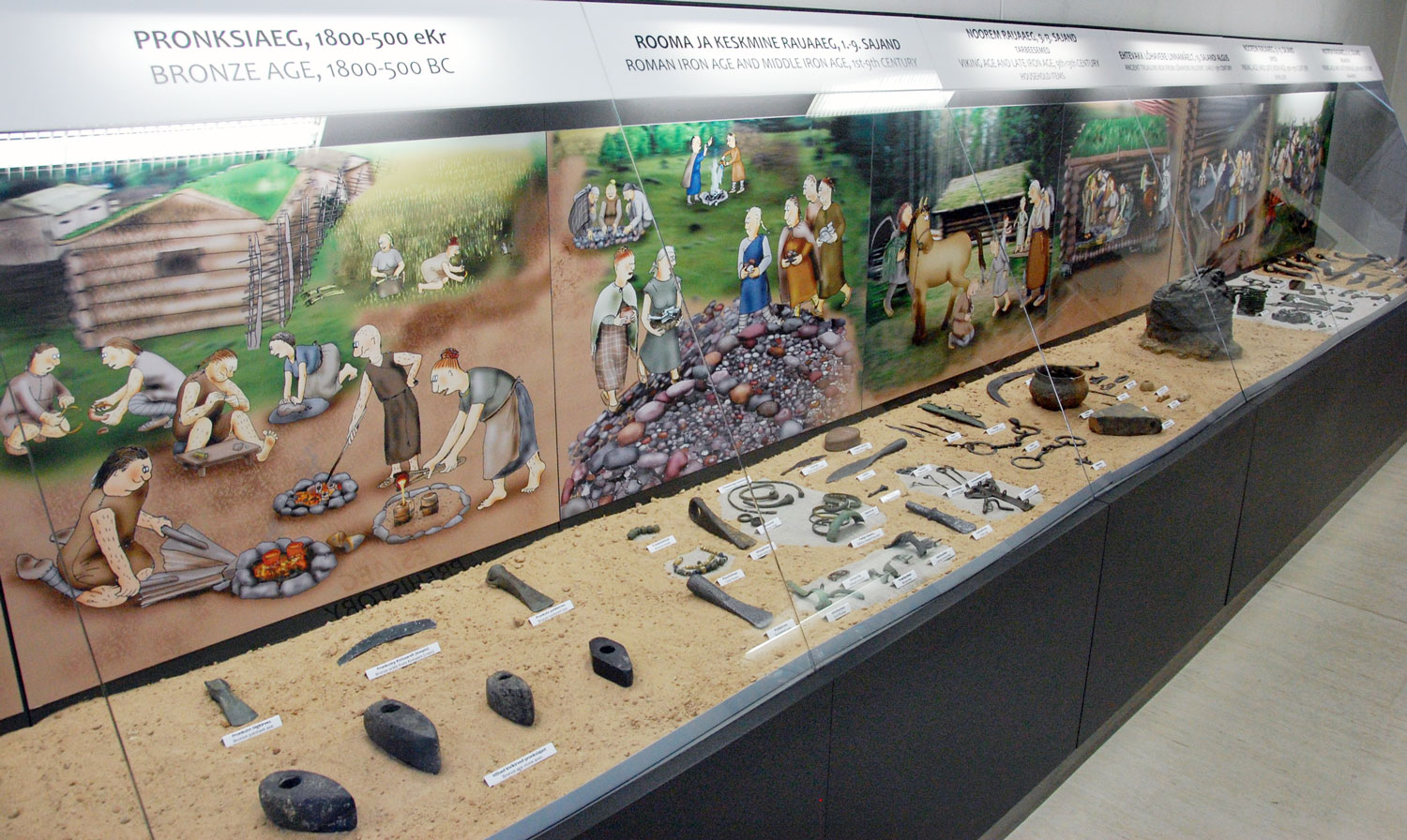
The exhibition on the history of Viljandi County begins with objects dating from prehistoric times. The tools, household objects, weapons and jewellery on display date from the Mesolithic period to the first quarter of the 13th century. The exhibition also features a model of the Lõhavere hill fort, a replica of the jewellery casket discovered there, and a reconstruction of an ancient Estonian warrior.
Arheoloogilised leiud esiaja ruumis
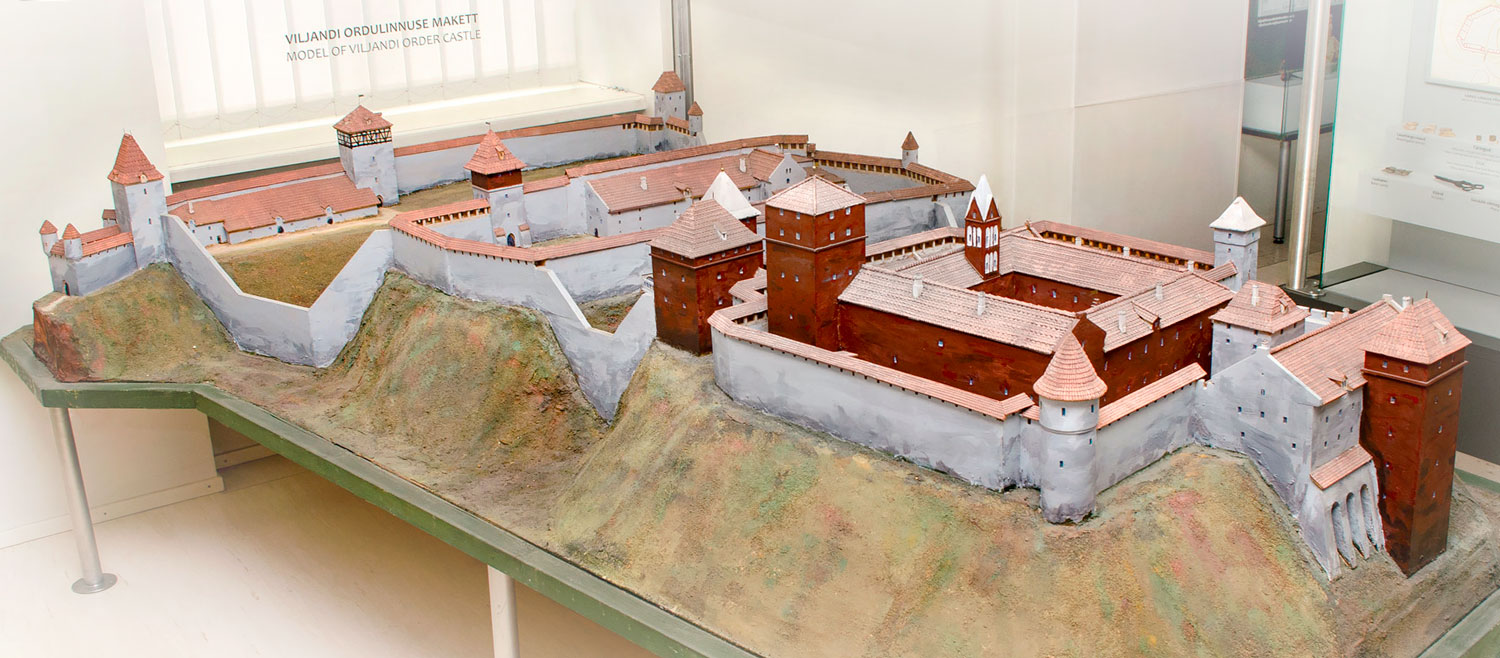
The section devoted to medieval and early modern Viljandi County explores everyday life in the region and the architecture of Viljandi Castle from the mid-13th century to the beginning of the 17th century. Its central exhibits are a reconstruction of the Viljandi Order Castle and capitals discovered during archaeological excavations there in 1878–1879. The display cases contain archaeological finds from across Viljandi County. A separate section presents military objects from the Livonian War and the Polish–Swedish wars.
Archaeological finds in the prehistoric gallery
Model of the Order Castle in the medieval gallery
The fourth gallery focuses on the history of the town of Viljandi and Viljandi County from the 17th to the 19th century. Documents and objects relating to the region’s manor houses and farms are on display. A separate section is devoted to Viljandi’s municipal government and includes official insignia, seals and other objects.
Viljandi Museum virtual tour – view of the permanent exhibition
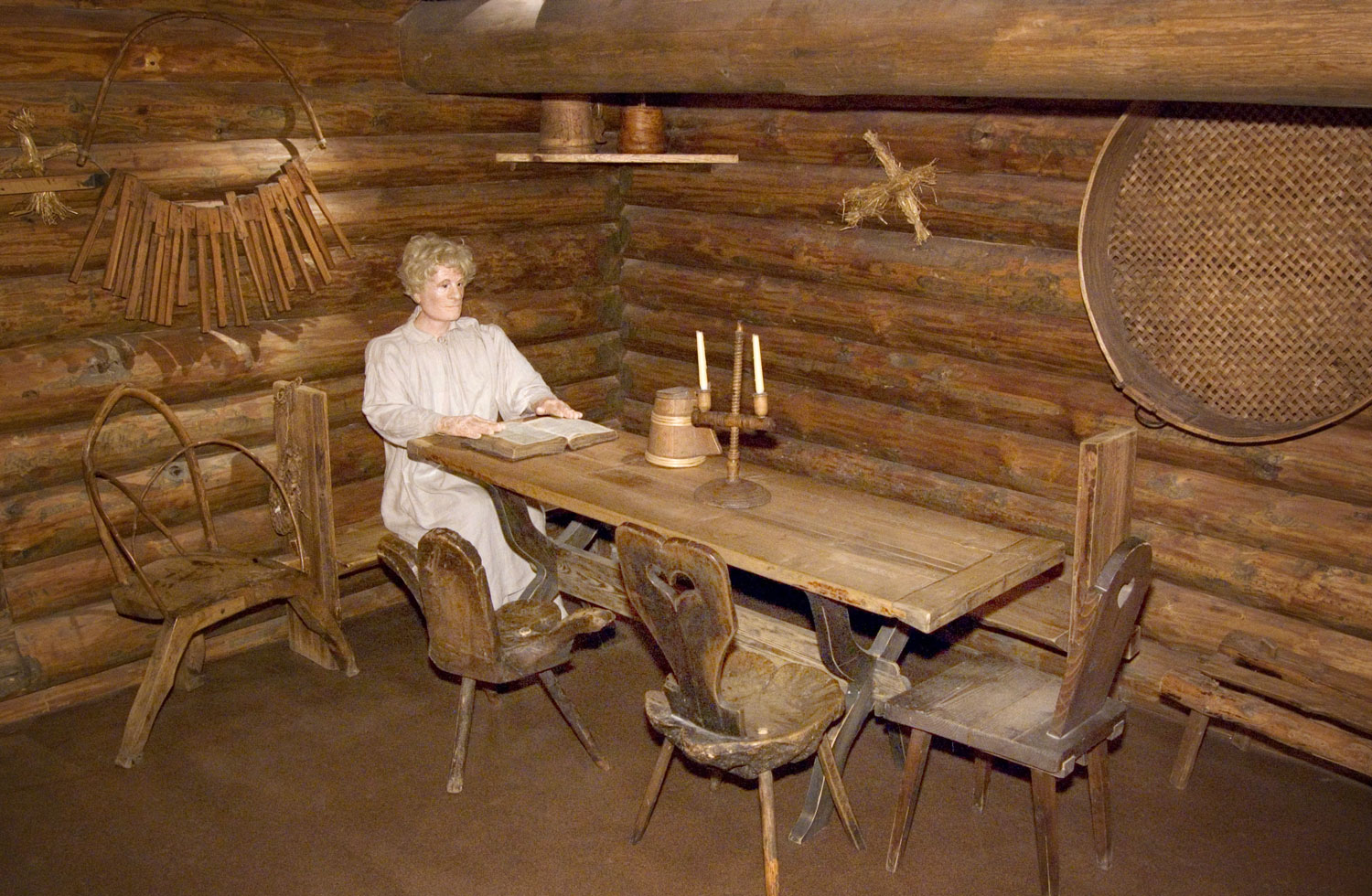
The next two galleries explore Estonian peasant culture. Household utensils, tools and peasant furniture used in Viljandi County are displayed in a reconstructed threshing-room interior.
The threshing-room display provides an insight into Estonian peasant culture, with household objects, tools and furniture from Viljandi County arranged in a recreated historical setting.
Viljandi Museum virtual tour – view of the permanent exhibition
Viljandi County from the late 19th century to the post-war period
The permanent exhibition continues upstairs with the history of Viljandi County from the second half of the 19th century to the post-war period.
The first section explores the county’s economic, cultural, educational and political development around the turn of the 20th century. Objects and photographs introduce local industry and business, the arrival of the railway and telephone, as well as Estonian and Baltic German social and cultural life and the region’s schools. The political history section covers the Russian revolutions, the First World War and the German occupation of Estonia in 1918.
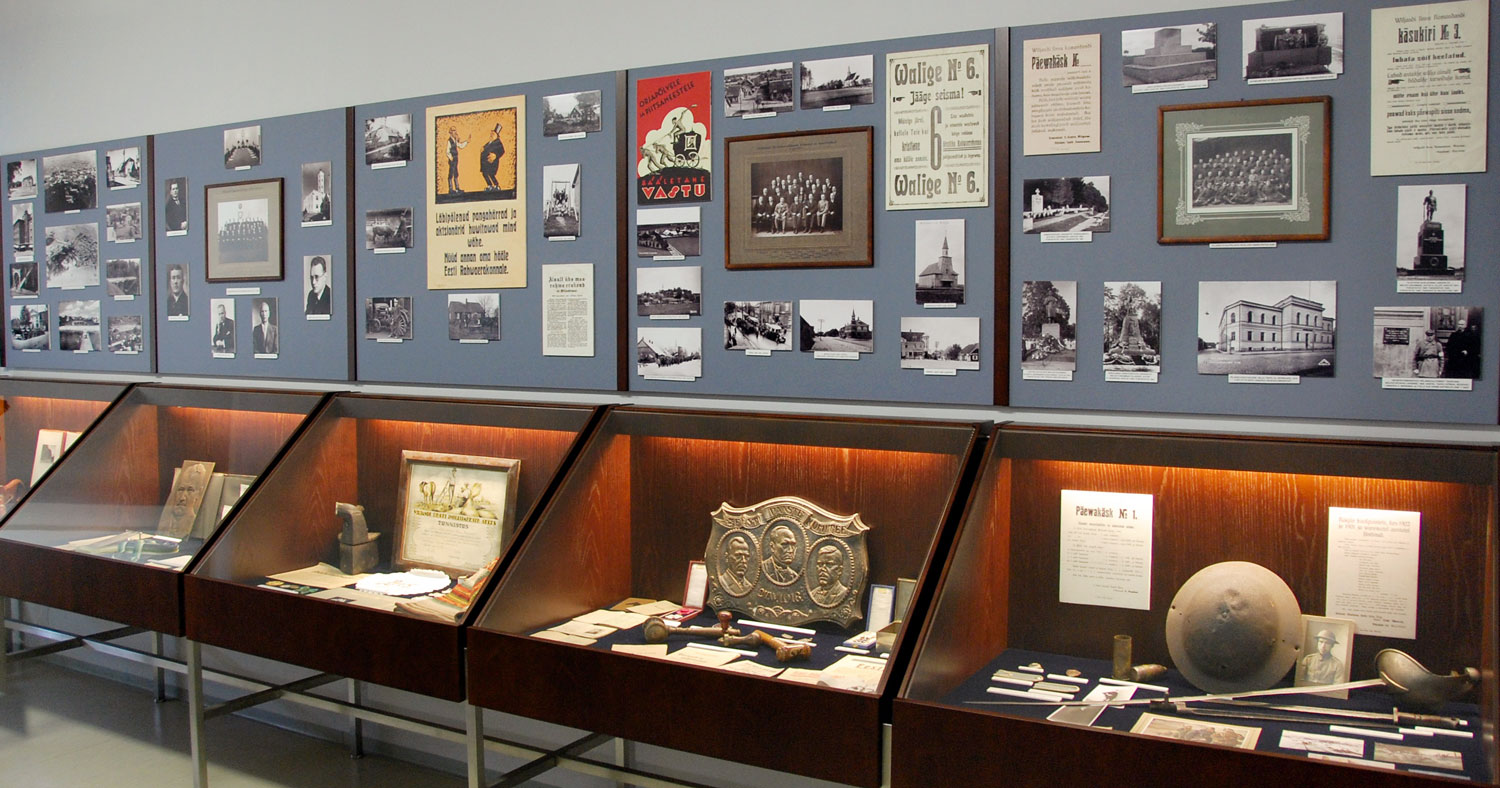
The exhibition then moves on to the Republic of Estonia from 1918 to 1940, beginning with the declaration of independence and the Estonian War of Independence. The display includes radio receivers, military collections and personal items, weapons, decorations and documents belonging to three Estonian officers: Lieutenant Colonel Martin-Friedrich Bergmann, Lieutenant Colonel Artur Tenno and Colonel Johannes-August Vellerind.
The early years of the Republic of Estonia
Also on display is a collection of awards belonging to the Sakalamaa district of the Estonian Defence League, discovered during renovation work at the museum in 1999.
The section on the destruction of the Republic of Estonia and the Second World War features propaganda materials from 1940–1944, together with Soviet and German small arms and military equipment.
Virtual tour
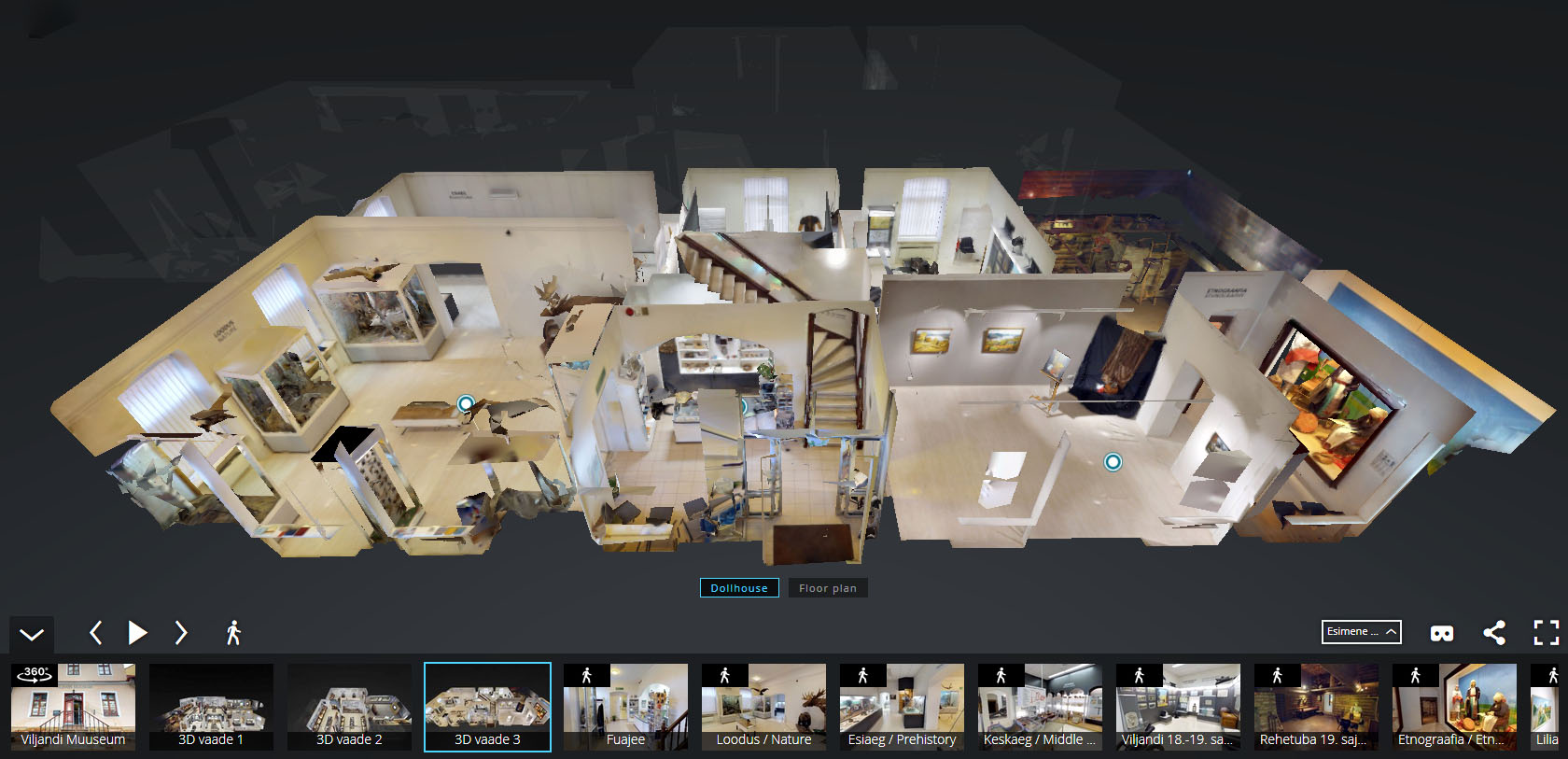
You can explore the Viljandi Museum exhibition building virtually as it appeared in October 2017, when the permanent exhibition on the history of Viljandi County was accompanied by a temporary exhibition of paintings by Lilian Härm from the museum’s art collection.
Viljandi Museum virtual tour – view of the permanent exhibition
The virtual tour allows visitors to look around each room in 360 degrees and move through the museum either automatically or interactively. Each room includes a short introduction, which can be opened by clicking on the relevant point. Visitors can also view the layout of the rooms and a cross-section of the building as a 3D model.
The virtual tour also makes it possible for visitors with reduced mobility to explore the entire exhibition building, as the stairs, steps and narrow passageways of the historic building make some areas physically inaccessible.
The virtual tour was produced by Avar Agentuur as a sponsorship project.
Thank you!