The permanent exhibition, spanning two floors of the museum, traces the history of Viljandi County through the centuries
The tour begins in the temporary exhibition hall, which features rotating displays. Here, visitors can gain insight into a diverse range of topics, notable people, and local stories, offering distinct perspectives on the culture and history of the region.
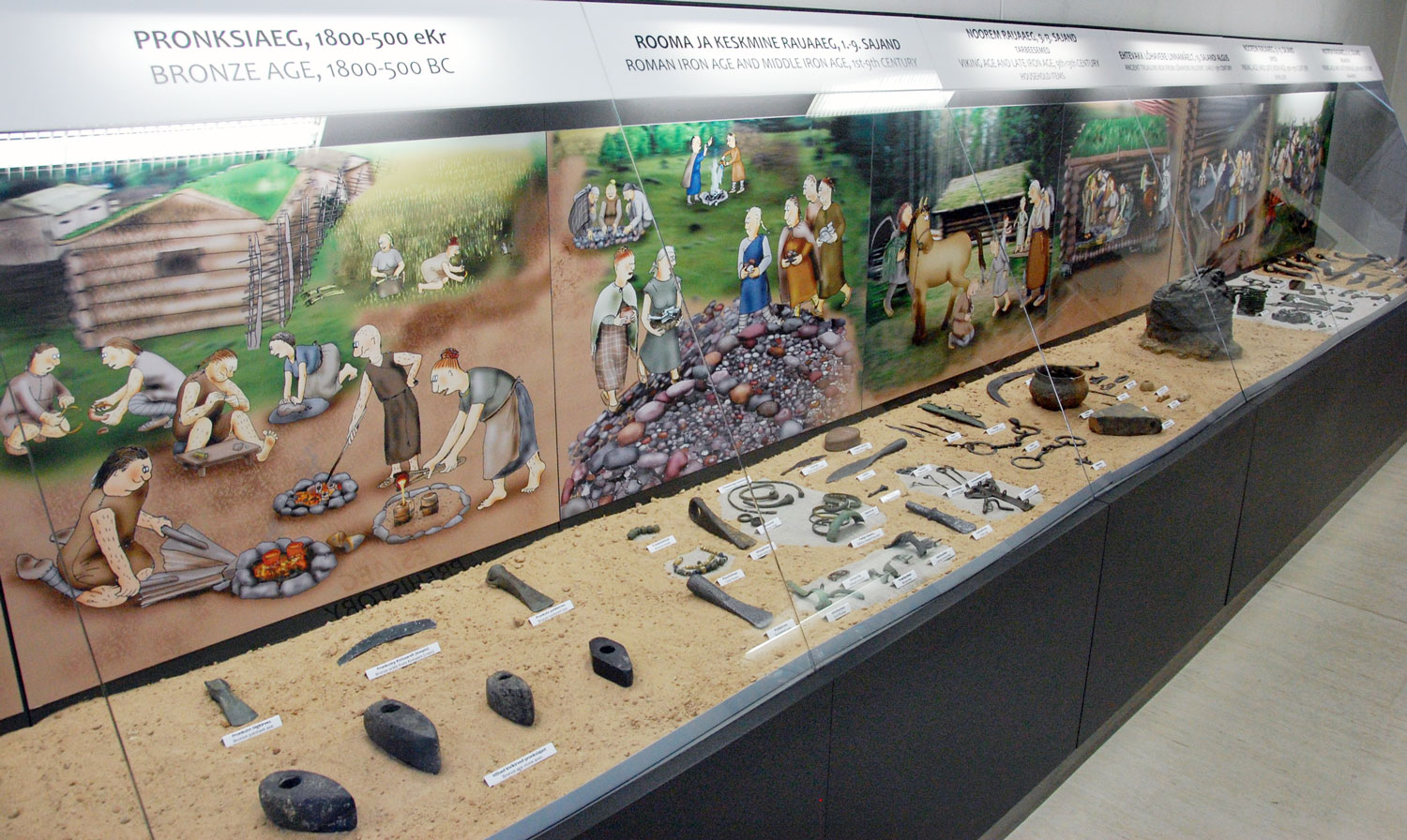
The ancient history section displays objects dating back to the Prehistoric Era. The tools, household items, weapons, and jewellery on display span from the Mesolithic Age to the first quarter of the 13th century. The display is brought to life by a scale model of the Lõhavere stronghold (the residence of the 13th-century Estonian chieftain Lembitu), a replica of a treasure box found at the Lõhavere site, and a figure of an ancient Estonian warrior.
Archaeological findings in the Prehistory exposition.
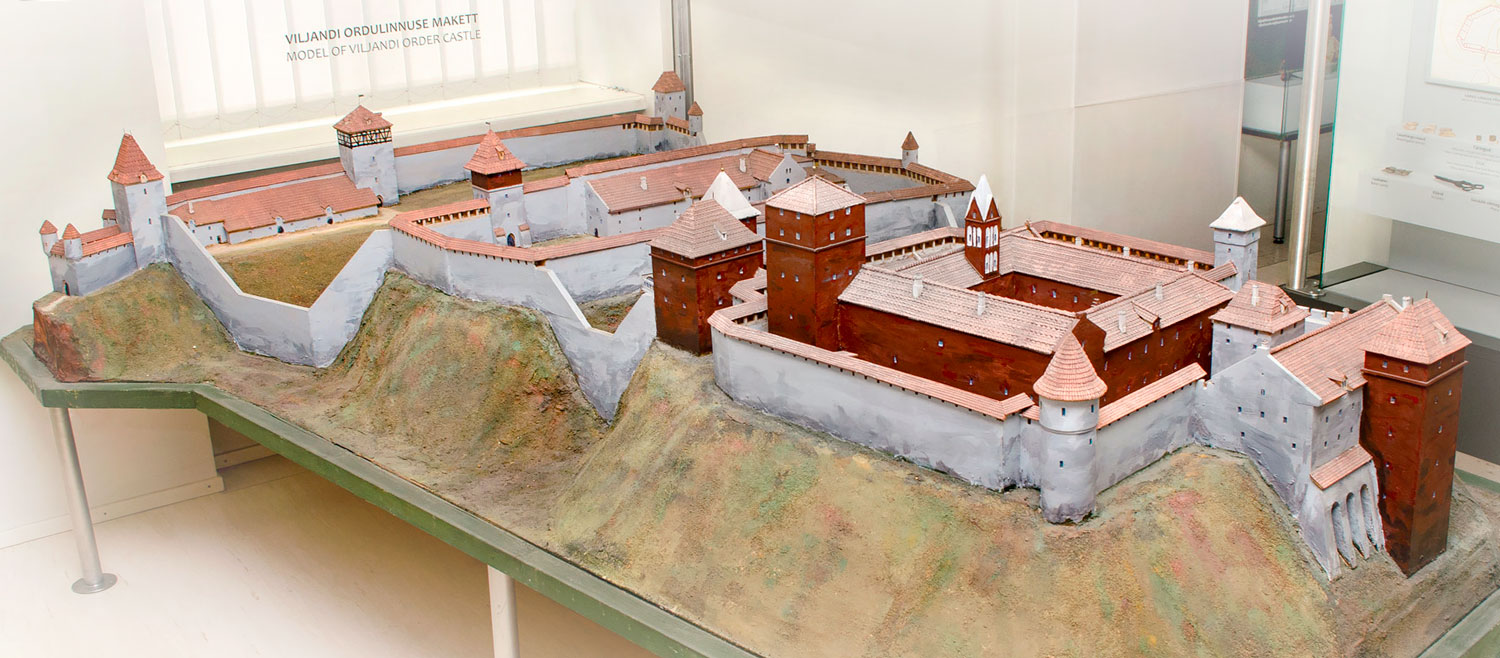
The Middle Ages and the Early Modern period in Viljandi County are reflected through the daily life of the region and the architecture of the Viljandi Teutonic Order Castle from the 13th to the early 17th century. The most prominent exhibits are a scale reconstruction of the castle and stone capitals unearthed during archaeological excavations in 1878–1879. The display cases showcase archaeological findings from across Viljandi County, with a dedicated section for military artifacts from the Livonian War and the Polish-Swedish wars.
Archaeological findings in the Prehistory exposition.
Model of the Order Castle in the medieval gallery.
The fourth hall focuses on the history of Viljandi and the surrounding county from the 17th to the 19th century, presenting documents and artifacts from local manors and farms. A part of this exhibition is dedicated to items related to the Viljandi municipal government, including badges of office and official seals.
The threshing-room display reflects Estonian peasant culture
Household utensils, tools and peasant furniture once used in Viljandi County are arranged in a recreated threshing-room interior.
A look at the permanent exhibition.
Vaade muuseum rehetuppa
From the 19th Century to the Post-War Period
The exhibition guides visitors to the second floor, which opens with the second half of the 19th century and the subsequent turn of the century. Artifacts and historical photographs provide an overview of the county’s economic, cultural, educational, and political history.
Visitors can see what the main production and commercial goods were before 1918, explore the local business landscape, and learn about the introduction of innovations like the railway and telephone. The display also offers a brief glimpse into both Estonian and Baltic German social life and introduces the region’s historical schools.
Particular focus is placed on the political turbulence of the first half of the 20th century, including the Russian revolutions and World War I. The overview of this era concludes with the events of the 1918 German occupation. A recreated seating area from a local club house illustrates the typical furnishings of a social hub at the turn of the century.
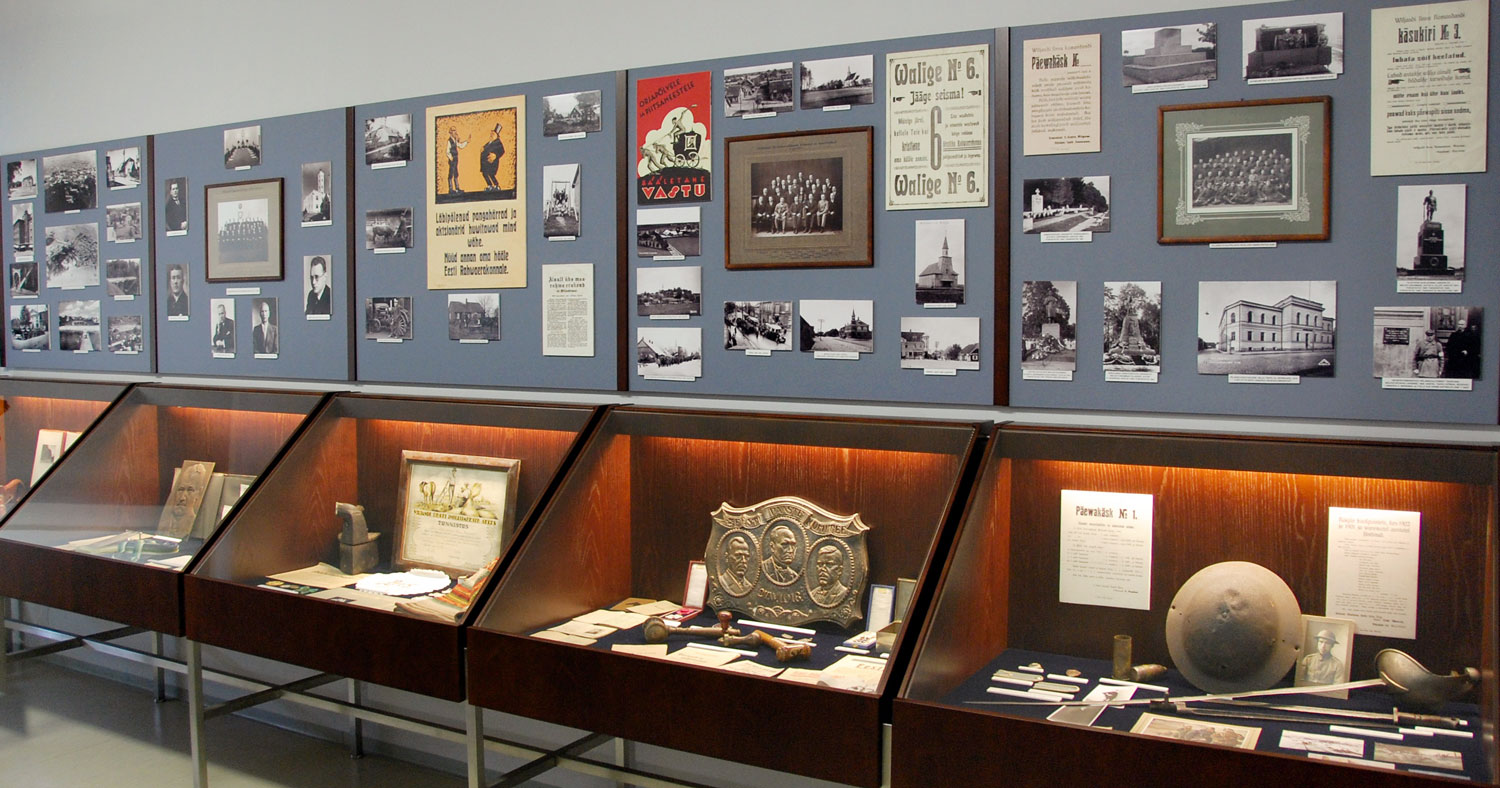
The next section covers the period starting with the proclamation of the Republic of Estonia and the War of Independence – the interwar Republic of Estonia (1918–1940). In addition to tracing the general development of the county, the exhibition displays period radio receivers and military gear. Visitors can view the collections of three Estonian army officers: Lieutenant Colonel Martin-Friedrich Bergmann, Lieutenant Colonel Artur Tenno, and Colonel Johannes-August Vellerind, featuring their personal belongings, weapons, decorations, and documents. Also on display is the award collection of the Estonian Defence League Sakala Brigade, which was discovered in 1999 during the museum renovations.
The early period of the Republic of Estonia.
The destruction of the republic and the events of World War II are illustrated by propaganda materials dating from 1940 to 1944, alongside Soviet and German light weapons and military equipment.
The post-war era of collective farming is depicted through dioramas created by the local artist Juhan Muks between 1955 and 1957 (restored in 1999), which illustrate the state of agriculture at the time. In the same hall, a dedicated space features a small exposition about the mass deportation of Estonians and the anti-Soviet partisan movement of the Forest Brothers.
The Virtual Tour
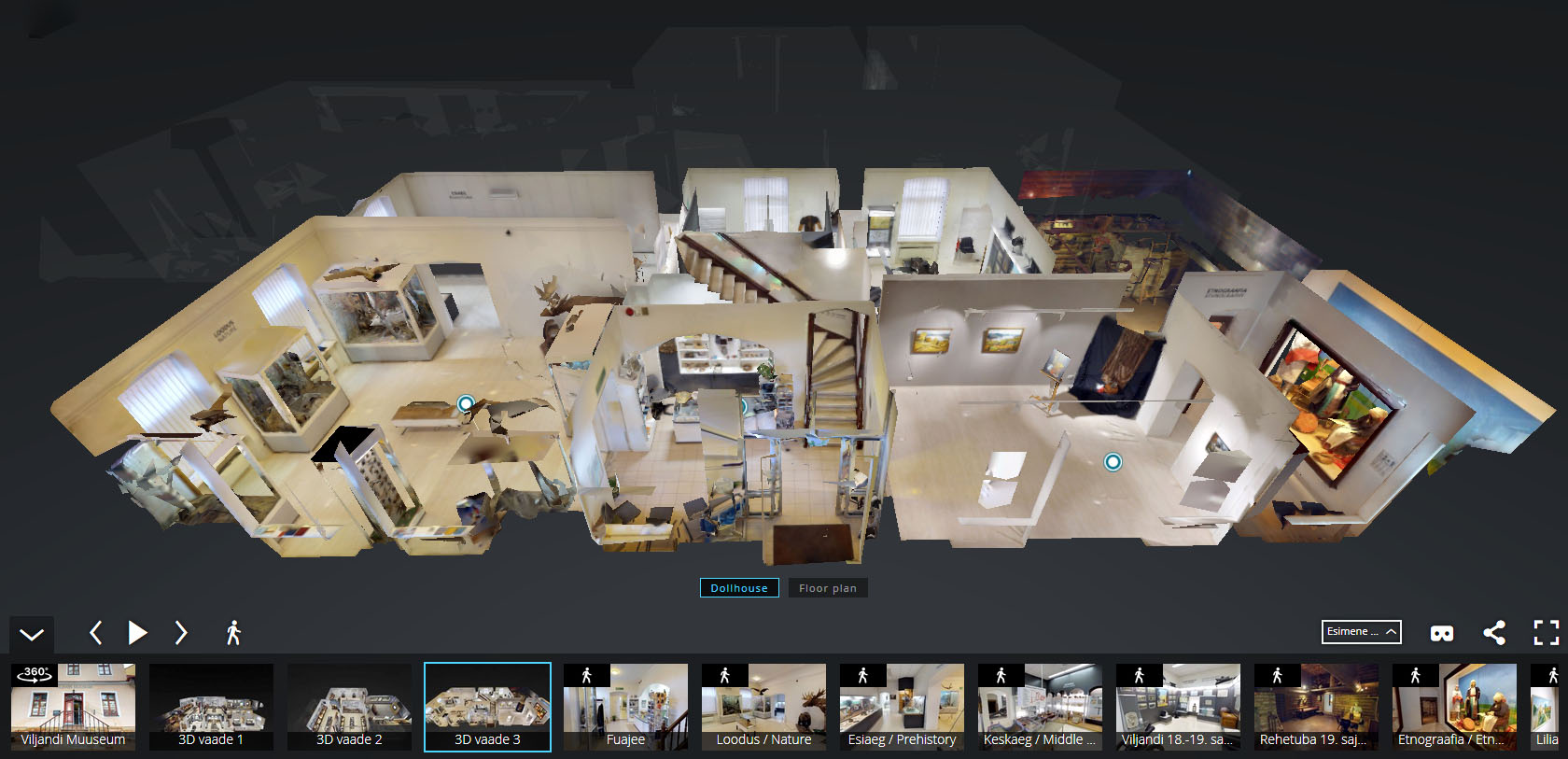
The exhibition building can also be explored virtually. The tour was recorded in 2017, capturing both the permanent history exhibition and a temporary display of paintings by Viljandi artist Lilian Härm from the museum’s art collection.
Virtual tour of Viljandi Museum – a look at the permanent exhibition.
Viewers can experience 360-degree imagery and choose between an automated guided path or interactive navigation. A short introduction (in Estonian) for each room opens with a click of a button. A 3D model is also available, showcasing the layout of the rooms and a cross-section of the building. The tour starts HERE!
The virtual tour allows people with physical disabilities to experience the exhibition building in full, as the stairs, steps, and narrow corridors of the historic building unfortunately limit physical accessibility.
The virtual tour was created courtesy of Avar Agentuur.